
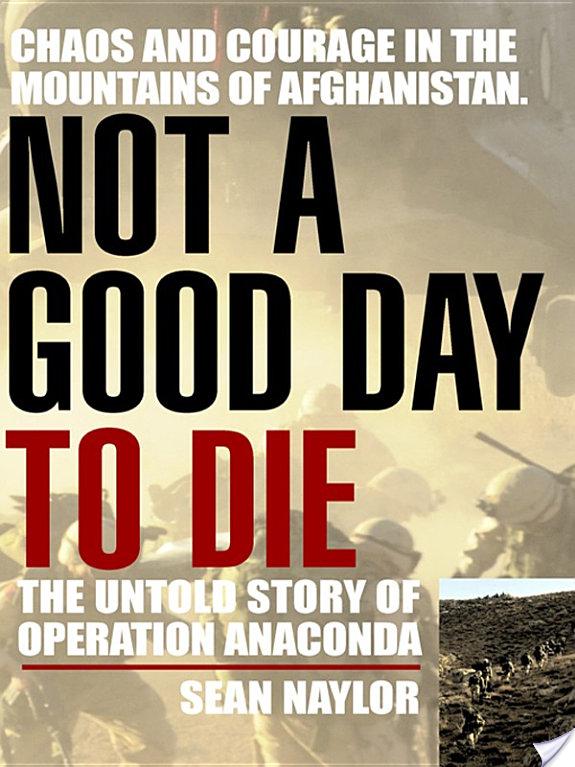
Award-winning combat reporter Sean Naylor reveals how close American forces came to disaster in Afghanistan against Al Qaida—after easily defeating the ragtag Taliban that had sheltered the terrorist organization behind the 9/11 attacks.
At dawn on March 2, 2002, over two hundred soldiers of the 101st Airborne and 10th Mountain Divisions flew into the mouth of a buzz saw in Afghanistan’s Shahikot Valley. Believing the war all but over, U.S. military leaders refused to commit the extra infantry, artillery, and attack helicopters required to fight the war’s biggest battle— a missed opportunity to crush hundreds of Al Qaida’s fighters and some of its most senior leaders.
Eyewitness Naylor vividly portrays the heroism of the young, untested soldiers, the fanaticism of their ferocious enemy, the mistakes that led to a hellish mountaintop firefight, and how thirteen American commandos embodied “Patton’s three principles of war”—audacity, audacity, and audacity—by creeping unseen over frozen mountains into the heart of an enemy stronghold to prevent a U.S. military catastrophe.
-
Sexual Content - 0/5
0/5
-
Violence - 2/5
2/5
-
Language - 2/5
2/5
-
Drugs and Alcohol - 0/5
0/5
Summary
Overall Not a Good Day to Die: The Untold Story of Operation Anaconda by Sean Naylor The author was a correspondent for Army Times who served as an embedded reporter in
Afghanistan. Mr. Naylor witnessed what he felt was a decidedly wrong way of undertaking this operation. Through persistent effort he eventually was able to get the Army to cooperate as he researched the battle for the book. What he writes is captivating, fascinating and really, really disturbing as you see the politics, in fighting, bureaucracy and confusion by the U.S. military in attempting to execute their battle plan. Operation Anaconda was a battle fought in a particularly inhospitable part of southern Afghanistan far from the eye of most reporters and television cameras. It started as an effort to root out a large force of Al Qaeda fighters from their base in a remote valley. In this part of the country the local tribes were not friendly with the Americans or the Northern Alliance troops resulting in little to no local support including troops and intelligence.This would prove deadly. Throughout the war then Secretary of Defense Rumsfeld persisted in an approach of minimizing the number of U.S. troops that could be deployed in any action. Some say this was an attempt to not appear to be just another “Soviet Union-like” occupier but it was also that Rumsfeld was enforcing his belief that U.S. technology in use supporting local troops could handle any situation. In fact, Secretary Rumsfeld has to personally approve any troop reinforcement requests. The politics also led to a force that elements from various units somehow being pulled together, being led in many cases by inexperienced leaders or at least leaders whose experience was not best suited for what they were about to undertake. These men were also put in charge of units that were not their own leading to a difficult and confusing chain of command and lack of communication. The result was a force that was undermanned, under-armed, and under-supported going into a situation that they did not fully understand. On top of it, the force they would encounter was far larger than they believed it to be. This book isn’t just about the mistakes made by ourmilitary starting with the SecDef but it’s also about the incredible courage and dedication of our troops. They are the best in the world,even under the horrible constraints which our government puts them at times. I couldn’t put this book down as I felt that I was right there, with the troops throughout the battle.
The author did a masterful job of pulling together what must have a been a jumbled mess of supporting documentation and eyewitness accounts. Book reviewer: Hunter Kirk
Violence Violence in the context of war. Not gratuitous.
Language Also in the context of war. Nothing gratuitous or excessive.